
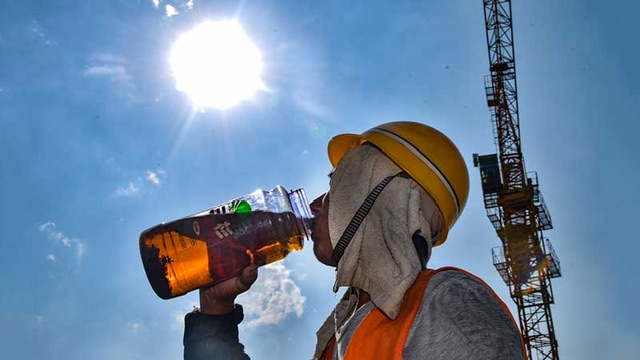
Dubai is likely to experience warmer and more humid conditions, with a potentially more active autumn weather pattern, as a powerful El Niño event develops in the tropical Pacific Ocean, according to forecasters.
The UAE’s National Centre of Meteorology (NCM) has forecast a 98 per cent probability of El Niño conditions between July and November 2026, after sea surface temperatures in the equatorial Pacific’s Niño 3.4 region rose above the threshold that defines the phenomenon.
El Niño is a naturally occurring climate pattern that occurs every two to seven years when unusually warm waters develop in the central and eastern tropical Pacific, weakening trade winds and altering global weather systems.
While the phenomenon originates far from the Arabian Peninsula, it can still influence regional weather patterns, with experts warning of indirect but noticeable effects in the UAE.
Forecasters say temperatures in the second half of 2026 are likely to be near-normal to above-normal, with a possible increase in humidity and a higher chance of short-lived but intense rainfall events, particularly in autumn.
Ibrahim Al Jarwan, Chairman of the Emirates Astronomical Society, said El Niño years are often associated with higher temperatures across the Gulf, increased coastal humidity and occasional shifts in wind patterns.
Meteorologists also warn that El Niño conditions can enhance tropical activity in the Arabian Sea during autumn, raising the likelihood of cyclones affecting parts of Oman, Yemen and potentially the wider region, although cyclone formation depends on multiple factors.
Global agencies, including the World Meteorological Organization, say there is an increasing likelihood of El Niño developing through 2026, with some models suggesting it could strengthen further into 2027. Scientists are also monitoring the possibility of a stronger “super El Niño” event, which could contribute to rising global temperatures.
Experts stress that while El Niño does not guarantee extreme weather, it does tilt the balance towards warmer conditions and more variable weather patterns in the UAE and beyond.